
Ever wondered why the randomness behind slot machines feels different from that in table games? The secret lies deep within their algorithms – and it’s more fascinating than you might expect.
Table of Contents
Technical Foundations of RNGs in Slot Machines
How RNGs Function Differently in Table Games
Ensuring Fairness: Certification and Testing of RNG Algorithms
Influence of Game Mechanics on RNG Design and Complexity
Implications of RNG Variations on Player Experience
Technical Foundations of RNGs in Slot Machines
Slot machines rely on pseudorandom number generators (PRNGs) that churn out thousands of numbers every second – often around 1,000 to 3,000 per second. These numbers translate to reel positions and symbols, determining wins. Providers like NetEnt and Microgaming use well-tested algorithms such as Mersenne Twister or proprietary variants, programmed to ensure an RTP (Return to Player) around 96% for popular slots like Book of Dead (96.21%) and Sweet Bonanza (96.51%).
Each spin’s outcome is independent, so the RNG doesn’t remember previous results. This independence is crucial to prevent patterns, maintaining unpredictability. The RNG seeds itself using system time or hardware entropy sources to avoid predictability. Still, the speed and frequency of number generation in slots are higher than in table games, reflecting the fast-paced nature of slot play.
One quirk is the weighted probability of symbols on virtual reels, which the RNG incorporates by mapping random numbers to symbol distributions. This allows rare symbols like wilds or scatters to appear less frequently, creating excitement and big win potential.
How RNGs Function Differently in Table Games
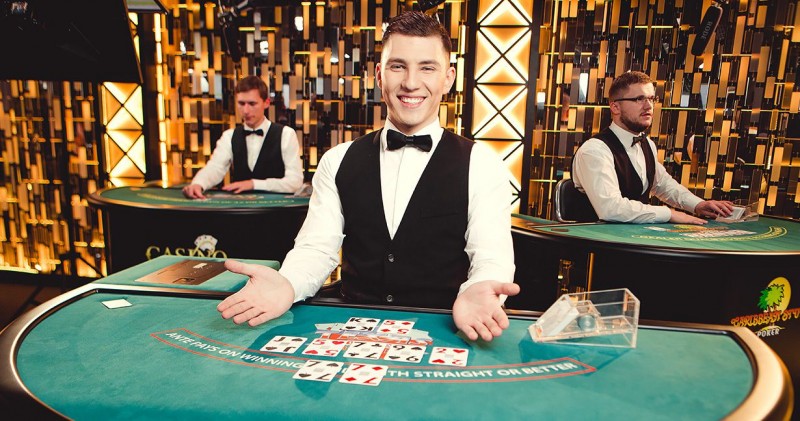
Table games such as blackjack, baccarat, or roulette use RNGs that simulate physical processes, like shuffling or spinning, with different technical needs. Unlike slots, these RNGs often generate outcomes at a slower pace, matching the game’s turn-based style. The algorithms must replicate card decks or roulette wheels accurately, maintaining realistic probabilities.
For example, blackjack RNGs simulate a 52-card deck (or multiple decks) with card removal after each deal, which means the RNG algorithm tracks previous cards, affecting future outcomes – unlike slot RNGs’ independence. This introduces complexity, as the algorithm must avoid impossible card combinations and ensure fairness in deck composition.
Live casino games blend RNG with real dealer actions, but online table games rely fully on RNG algorithms tailored for each game. To get started with gpay casino, understanding these differences helps you appreciate the technology behind the tables.
Roulette RNGs generate numbers from 0 to 36 with uniform probabilities, but they must also simulate the ball’s physics to avoid suspicious streaks, balancing randomness with realism.
Ensuring Fairness: Certification and Testing of RNG Algorithms
Both slot and table game RNGs undergo rigorous testing by independent labs like eCOGRA, iTech Labs, and GLI. These organizations analyze algorithms for statistical randomness, distribution uniformity, and compliance with jurisdictional standards such as MGA or UKGC licenses.
Testing involves running millions of simulated plays to check for anomalies or bias. For instance, slots’ RTP is verified against expected values, while table games’ RNGs are assessed for correct deck simulations and outcome frequencies.
Some casinos publish RNG audit reports publicly, reinforcing trust. But the catch is that certification doesn’t guarantee fun – just fairness. It’s up to you to pick games that balance randomness with engaging mechanics.
Influence of Game Mechanics on RNG Design and Complexity
Game rules profoundly shape RNG design. Slots feature complex mechanics like cascading reels, multipliers, and bonus rounds, demanding RNGs that handle multiple layers of random events simultaneously. For example, a slot might use RNG outputs to trigger free spins, pick bonus symbols, or calculate multipliers – all in one spin.
Table games, on the other hand, require RNGs to respect strict logical constraints. Blackjack RNGs must track cards dealt to avoid impossible hands; poker RNGs simulate multiple players’ hands without overlap. These constraints increase algorithmic complexity and slow down the random number generation compared to slots.
This link provides insights on how bonuses interplay with game mechanics, affecting RNG designs in online casinos: this link.
Comparison Table: Slot vs Table Game RNG Characteristics
| Feature | Slot RNG | Table Game RNG |
|---|---|---|
| Random Number Frequency | ~1,000 to 3,000 per second | Much slower, per game action |
| Outcome Independence | Each spin independent | Dependent on previous outcomes (card removal) |
| Complexity | Weighted symbol mapping, bonus triggers | Deck/card tracking, rule compliance |
| Fairness Testing | RTP verification, distribution uniformity | Deck integrity, probability accuracy |
| Game Examples | Book of Dead, Starburst | Blackjack Classic, European Roulette |
Implications of RNG Variations on Player Experience
These algorithmic differences influence how you perceive randomness and fairness. Slots’ rapid, independent spins create a feeling of constant opportunity – every spin is a fresh shot. But that also means streaks and droughts can feel extreme, given the high variance.
Table games’ RNGs, tracking cards or game states, can feel more predictable if you understand the mechanics. Card counters in blackjack exploit deck composition, showing how RNG dependence shapes strategy. Yet, for casual players, these algorithms provide a steady, realistic flow, mimicking physical gameplay.
Sometimes, table games RNGs introduce delays due to calculations, which can frustrate impatient players used to slots’ speed. But the payoff is a fair and immersive experience that respects real-world probabilities.
Ultimately, knowing these differences helps you choose games fitting your style – fast-paced thrills or strategic depth. And if you’re curious about the tech behind your favorite titles, digging into RNGs adds a new layer of appreciation.
